Photo Gallery
Around the world in a 19 ft sailboat
Not everyone wants to ply the Lower Neuse River on a breezy day in a 19 ft sailing vessel.
If the vessel plans are signed by Graham Byrnes, long resident of “the county, Pamlico County that is,” internationally acclaimed yacht racer, designer, and builder of vessels from dinghies to yachts, a few would take on the Neuse, no questions asked in a vessel to which he has attached his name. Slightly less than a few would endeavor to take on blue water. Fewer than a few would leave the Oriental dock one year to circumnavigate the globe, in a 19 ft vessel, that’s 19 feet, one less than just 20 feet, one more than just 18 feet … sporting the B&B logo. Josh Kali would, and did.
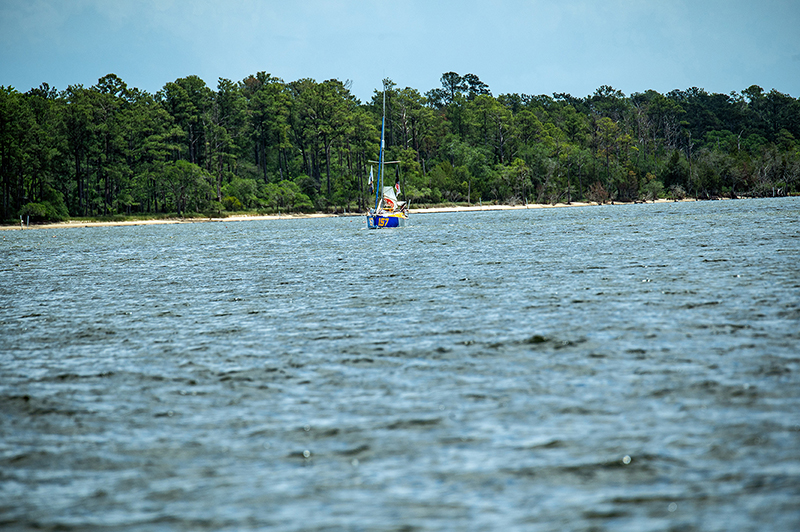
First spotted in the Adams Creek section of the Intra-Coastal Waterway on the return to Oriental, May 13, 2026, a little over 500 days since departing Oriental in December of 2024.
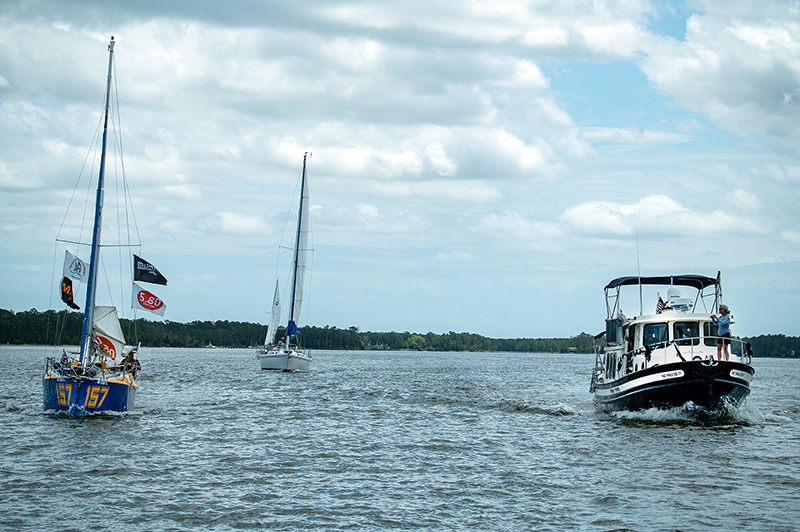

Playing Boat with a Cat Boat
Oriental resident Paul Kobiela made a move contrary to a pronouncement by the late CBS News anchor, Walter Cronkite.
In the decade of the 70s, Cronkite was an avid sailor with Martha’s Vineyard as home port. Whenever traveling north or south on the ICW, he regularly stopped in Oriental: docking, spending the night, and having dinner with his wife and crew at what was then the Oriental Marina Restaurant.
In a biography about Cronkite, Mrs. Cronkite asked her husband, “Doesn’t anybody ever buy a smaller boat?” He answered, “Not if they can help it.”
Realizing the need to sail a smaller vessel has left some aging sailors either buying a powerboat or giving up boating. Not so for Kobiela. This man, who once sailed from Galveston Bay across the Gulf of Mexico to Coral Bay, Florida. “Basically solo because my son who accompanied me was a ‘green’ sailor.”
His 74 year-old problematic knees suggested he do what was the unthinkable according to Walter Cronkite. Kobiela sold his large sailboat and purchased a boat he could easily sail solo, a ComPac Horizon Cat Boat designed by Halsey Herreshoff … one mast, one sail, a wide beam, but only 20 feet long.
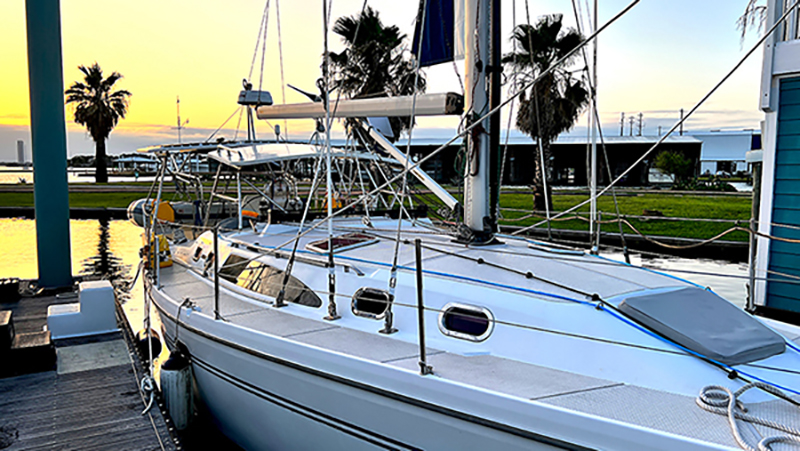
“I had a Catalina 375, that I could sail single-handed. I designed and built a hard top for it myself.” A phrase coined by Biff Von Fabrice, a regular at Oriental’s Think Tank for sailors, The Bean, describes Kobiela’s winter of ’25 – ‘26. When Biff leaves The Bean in the mornings with a cup of coffee, his parting comment is, “It’s time to go play boat.”
The journey to the Cat Boat he purchased was not necessarily a one and done deal. Kobiela said, “I had visualized sailing up to the coast of Maine in my other boat. There is a nice sailing area there. But that trip would not have worked with my dog. He would not have gone to the bathroom on the boat. That would have meant two trips ashore each day in a dinghy. That would have been too challenging for me and my sore knees.
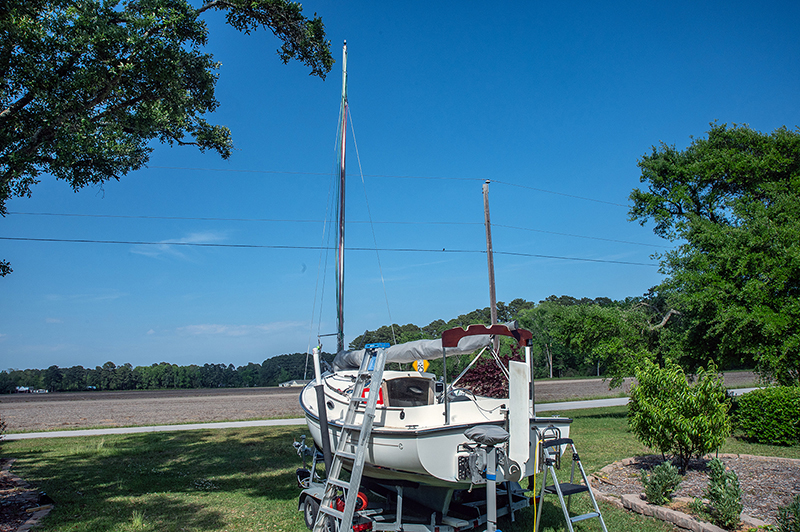
Kobiela played boat in his yard on the north end of North Street.
Kobiela enjoys designing and adding features to boats as much as he does sailing. He spent months playing boat, re-outfitting his new-to-him Cat Boat. He commented, “I love to make things; I like creating and doing projects.” With his characteristic broad grin, he added, “Some of them have been crazy. When I left Research and Development at Texas A&M, I created my own company. I was hungry to make things I designed and hungry to make money making things.” For Kobiela, that hunger now translates to playing boat.
According to Kobiela, Cat Boats were allegedly so named in New England when these vessels were used for commercial fishing. Back in the day, upon returning to the docks, they would be met by large contingents of cats.
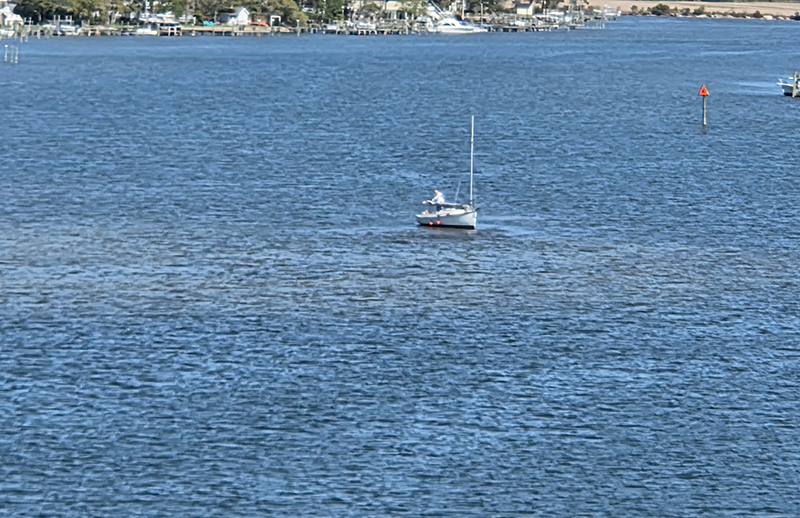
Read on to learn what a shift in wind direction with gusto can do for any shallow draft vessel such as a Cat Boat. Cindy Casey’s photo taken from Oriental’s Bob Scott Bridge exhibits the color shift from blue deeper water to sandy colored shallow water, a photo that captured the only moment of drama on the initial shake down cruise after a winter of playing boat – under way but not making way.
Kobiela acquired his ‘new’ Cat Boat from South Carolina this past winter. The snowmeggedon of 2026 barely made a dent in the time he spent in the cold months refurbishing this boat. It had been manufactured by a firm in Florida operated by two brothers. One of the brothers died. Instead of selling the firm, the surviving brother just closed the factory.
Asked about a new name for his boat, recalling that there would be no more ComPac Horizons, he replied, “Well, you know cats have 9 lives. So, I am considering “Number 9.”
On the way to discovering the prospective Number 9, Kobiela investigated available boats 20-25 feet long that would accommodate him. First was a Seaward 23 which was designed for shallow water, reminding one of Sharpies, shallow draft sailboats used as fishing and freight boats from the Carolinas to New England.
But Kobiela changed his mind about a Seaward. “The Seaward has a high center of wind pressure and I don’t think I would like that in local winds that are often gusting to 25 knots here.”
Kobiela then considered a Rhodes 22. He said it was first built in 1960 by a company called General Boats. He added, “I didn’t want a boat which was more usable if it was kept in the water. “Trailering the boat with furling genoa would have been difficult for me as it is a difficult one-person job. On top of that, if I kept her in the water, I didn’t want to have to haul her out for bottom paint on a regular basis.”
He next found a ComPac Horizon that was in the water in Boston. He turned it down because, “That boat had a smaller cabin and a bigger cockpit which I prefer, but I didn’t want to drive to Boston and haul a boat back with winter coming on.”
He settled on the ComPac Horizon he found in South Carolina. “It has all the comfort I need, I can cook on her, unlikely, but it has a porta potty and a water tank.”
Many who grew up in an environment where it was much easier to turn a key to ignite an engine for fishing trips never learned to sail. Such a green sailor, accustomed to a key instead of a sail, a neighbor of Kobiela’s, told him of his profound desire to learn to sail, but with a very simple boat, one sail, one mast. A promise was made to the neighbor.
After months of playing boat, the day of a shake-down cruise arrived. Not knowing how vessel and sailor would perform, Kobiela chose a day when the 20 knot winds in the Neuse had substantially subsided.
Have Camera – Will Sail … the neighbor followed Kobiela to the Oriental Wildlife Ramp for documentation of the launch, expected to take a few moments.
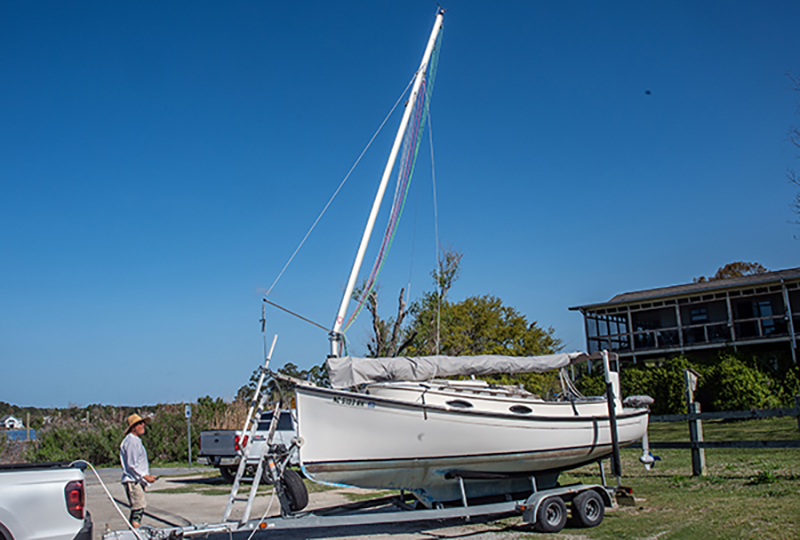
The first surprise came with the raising of the mast. Expecting to witness the veteran sailor cranking a winch, Kobiela was standing several feet away from boat and trailer as the mast began to rise. A closer look revealed that a handheld remote-control unit was operating an electric winch situated on the trailer, but linked to the cable that would lift the mast skyward.
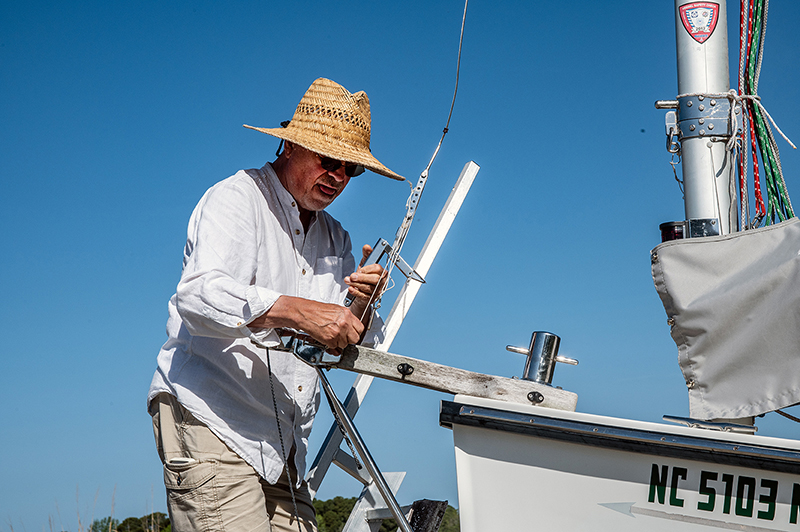
The mast raised, Kobiela secured the mast cable and disconnected the electric winch.
As for the results of his ‘playing boat,’ it is well to remember that Kobiela was a researcher at Texas A&M University Physics Department.
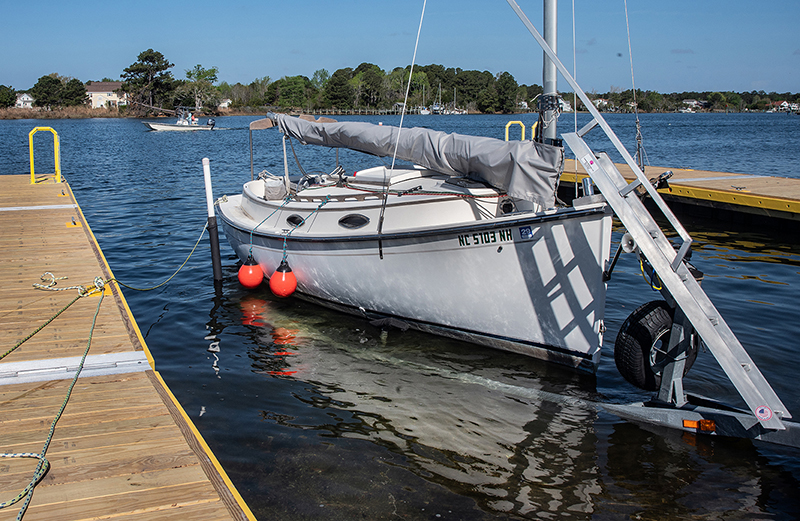
Just after the camera recorded the effortless glide into the waters of Smith Creek, Kobiela asked the greenhorn neighbor with camera fascinated with the simplicity of a Cat Boat, “Well, aren’t you coming along.” “How long will you be out?” “Probably about 2 hours.”
A quick call to household management back on the shores of Camp Creek, and a green sailor was along for a ride.
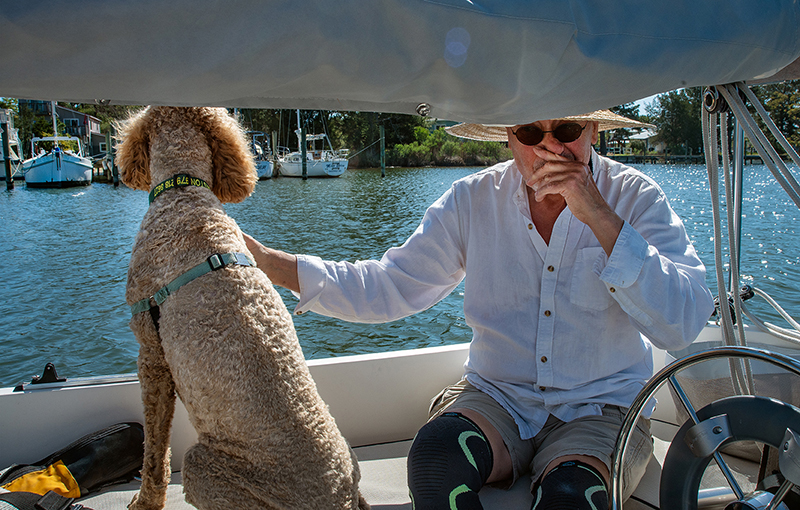
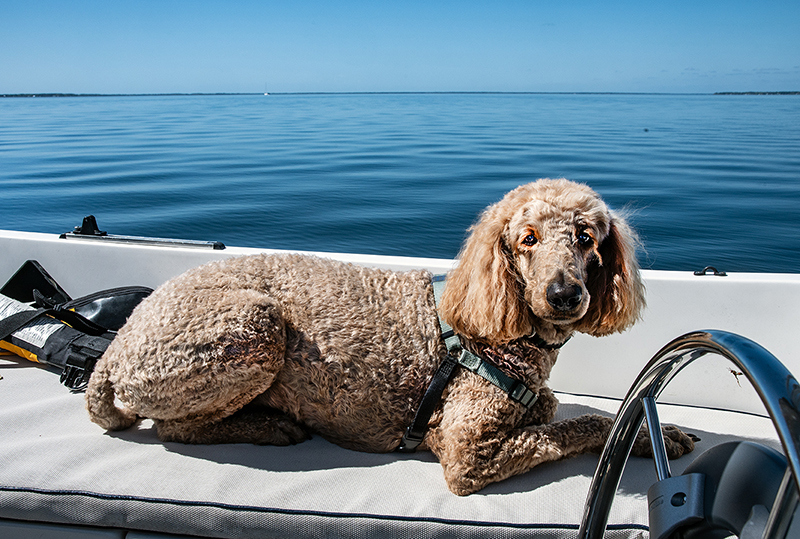 The other passenger was Kobiela’s poodle, Gaston, pronounced with a French flavor. If ever photos replaced thousands of words, photos of Kobiela contemplating performance so far and Gaston reclining peacefully on the Neuse need no more description.

Manuevering away from the dock, virtually all sailing vessels spend that time as power boats. But this Cat Boat had a 6 KW motor, not an engine. Kobiela said, “I can’t stand engines. They are too noisy and require so much maintenance. I just love the peace and quiet of the electric motor, not to mention I am not polluting the air and water with exhaust.”
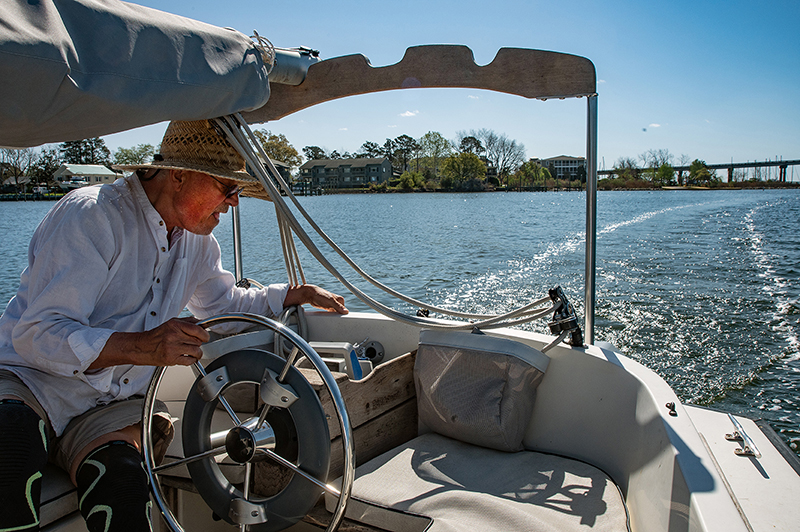
At first, Kobiela hid any apprehension about how the combination of displacement hull and electric motor would work. If there were any moments of apprehension, they immediately dissipated as the Cat Boat recorded a speed of 5.5 knots. The broad smile on the veteran sailor’s face was ample evidence of confidence in the upcoming sea trial.
Kobiela piloted the boat to the confluence of Smith and Morris Creek before steering toward the Bob Scott Bridge and the Neuse where he planned to calibrate the auto pilot. The first and only equipment failure occurred almost immediately. The depth finder that accompanied the boat when purchased was not working
Not to worry. The veteran and the greenhorn headed towards the river – but too close to Teach’s Point. After several moments of pulling the rudder out of the creek bottom, veteran and green horn were again under way, making way.
Once in the Neuse, calibration of the auto pilot took place. Kobiela spoke profound.ly “I am addicted to auto pilot. When I sailed across the Gulf of Mexico, I only spent about 20 minutes at the helm. We had to come in to a commercial port in Louisiana to avoid a storm. With auto-pilot, one can concentrate on the joy of just sailing without having to be constantly concerned if the boat is on course.”
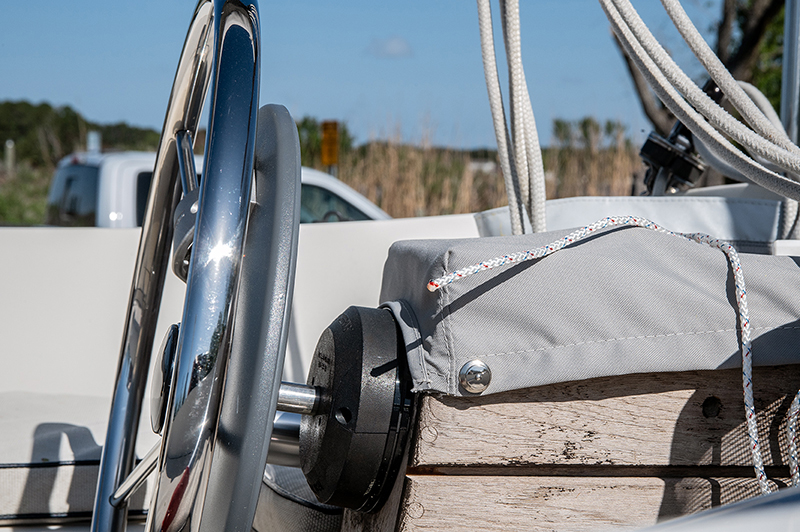
Helm with 2 wheels is a helm with auto-pilot.
When the auto-pilot was calibrated, a glaring discovery was made. Not only had the 20 knot winds from the day before dissipated, they had disappeared. So, the motor, not the engine, took the duo all the way across the Neuse and back, via auto pilot.
Approaching SC#1, Kobiela stood up in the boat and walked from side to side, not a long distance, but far enough for him to say, “I like her. She is stable and doesn’t rock back and forth when I walk back and forth. I just have to fix the depth finder issue and take her out when there is a reasonable wind.”
Asked what journeys he might take and the big grin reappeared across his face. “I have thought about Ocracoke.”
The next misadventure, if one can call it that, occurred when waiting in line at the ramp. Kobiela had fenders on the starboard side. He had chosen to retrieve the vessel on what would be the starboard ramp approaching from Smith Creek. As Kobiela and crew of the greenhorn and Gaston, the Wonder Poodle approached the ramp, a boater launching his skiff from that side tied his boat to the floating dock, in the traffic area, not outside of the launching/retrieving area. He then hurried to his truck, but instead of backing down the ramp to retrieve his boat, he drove off and did not return for almost 30 minutes.
The foreign accent of the mild-mannered Polish physicist was moderately toned down from his original expression of anger at this individual. With a totally different styled grin, he simply changed his desire for one type of implement to a different one. “We should cut the boat loose.” The green horn suggested towing the boat up to the far end of Green Creek and tying it to a tree.
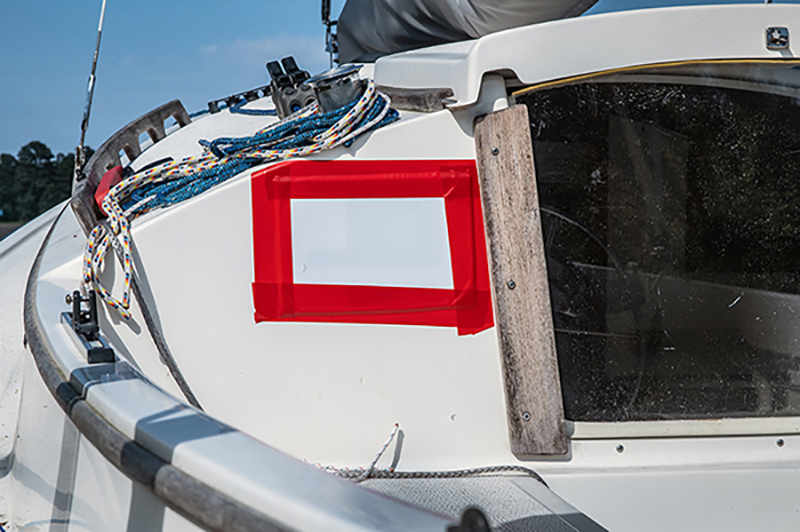
Back in dry dock, the red rectangle awaits delivery of a new depth finder.
After the sea trial, the same electric winch and remote control that raised the mast was set to pull the boat the last two feet onto the trailer. Not to embarrass Kobiela, but he pulled a Ben Casey stunt that frightened Casey. The remote control for the winch failed to start the motor of the winch. Wild thoughts ran through Casey’s head. He thought silently to himself, “How in the world are we going to pull that boat the last two feet on that trailer?” Kobiela suddely threw both arms in the air, again grinning that characteristic grin, before hooking power to the winch.
A 2-hour sailing adventure that may have seemed nothing out of the ordinary for most sailors, was anything but ordinary for a sailor who spent the winter ‘playing boat.’ The trip was extraordinary to a sailing greenhorn five years older than Kobiela with a desire to sail his camera in a boat with one mast and one sail.
Yellow Makes its Annual Visit
Once a primary color announcing spring’s arrival in early April, warm weather … ahem, climate change … in late March, yellow now coats the surface of anything, whether near a pine forest or not.
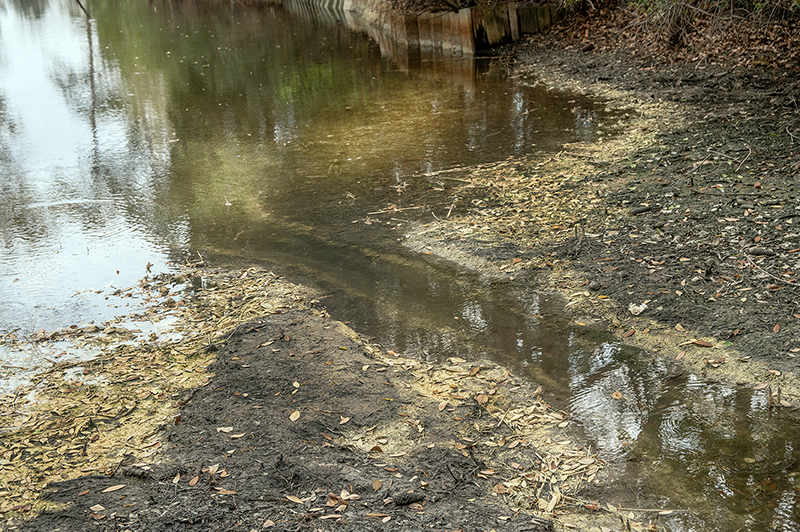
Winds generated by shifts in the earth’s axis during the vernal equinox transport pine pollen all over local river shores, creek banks, and landscapes from our abundance of loblolly and long leaf pines.


Pesky but pretty dandelion blooms in manicured lawns are not significant contributors to painting land and water yellow.

Carolina jasmine blooms provide a temporary draping of many pine trees. Not a significant source of pollen, the vines do provide a beautiful, but fleeting view, in early spring.
Click here for related story on Towndock.net
Snow / fog in the southern part of 'the county.'
On January 31, 2026, seventeen inches of snow fell where the Neuse wraps around the Minnesott peninsula. Novice with 4WD, one camera and one lens journeyed into the county as fog, like big cat feet, was smoking over the snow .(Apologies to Carl Sandburg and Bob Simpson)
Question … how often does anyone engaged in sane activity need 4WD in the county? Growing up in the county about 3/4 of a century ago, I can’t recall a single farmer or deer hunter who owned a 4WD vehicle.

Blackwell Point Road, Oriental.
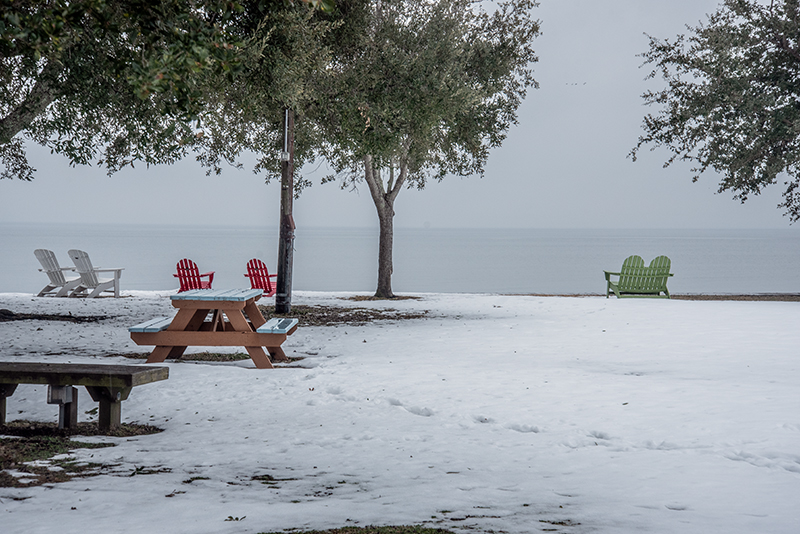
Lou Mac Park, fog drifting over the Neuse.
Recall grandparents saying, “Let me show you pictures of my new grandchild,” old photographers are just as excited to say, “Let me show you my snow pictures.”
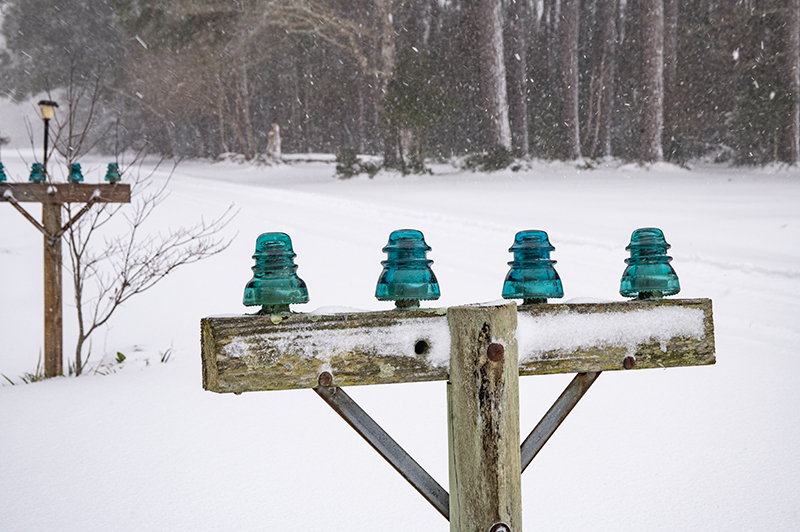
Short light poles less susceptible to damage from storms of any kind.
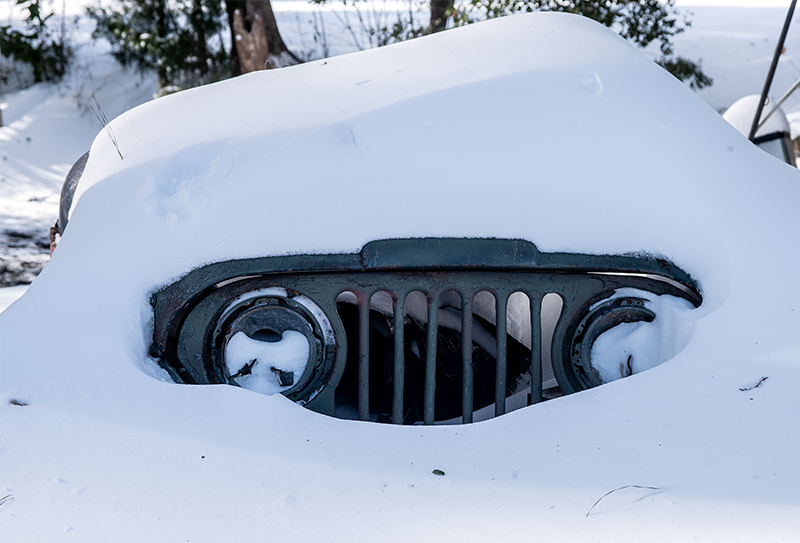
Reminds one of The Battle of the Bulge in the dead of winter, a time and place where American soldiers did not take delight in snow.
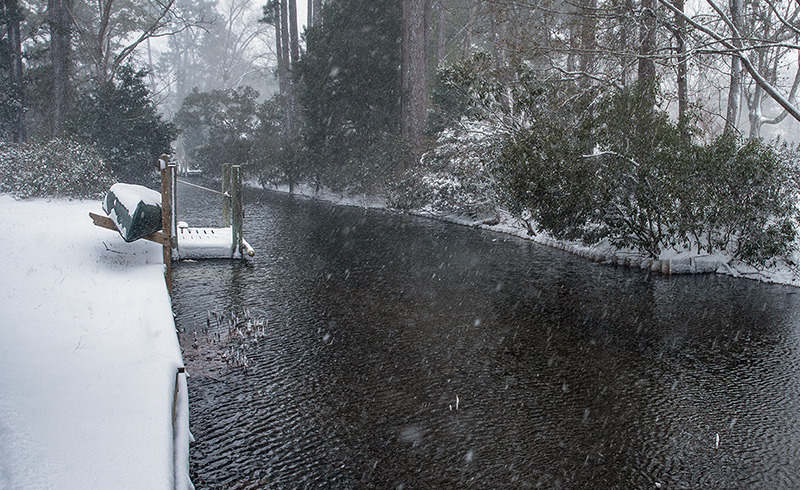
As charming as the snow looks falling along creekbanks, it was not a good day to launch a canoe.

As intelligent as man seems to be, he is no match for so much in nature that can endure the extremes nature brings forth.

Evening and fog settle in, Holt’s Chapel Community Center, Pamlico County Rosenwald School on Janiero Road
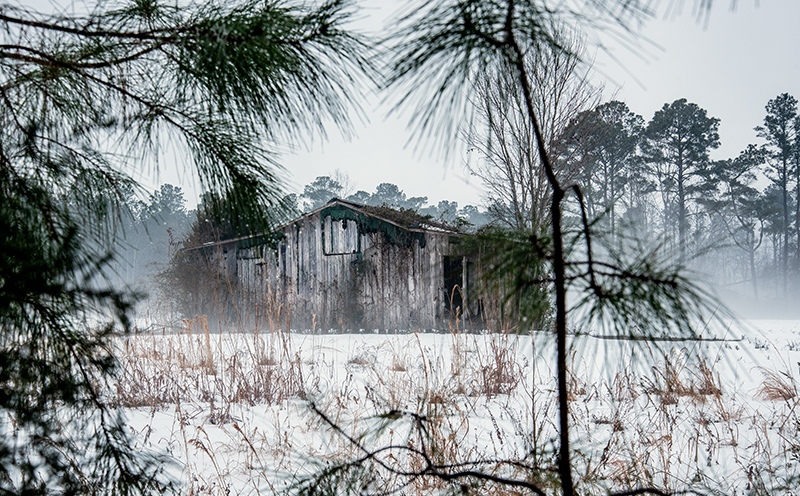
Old barn, Kershaw Road, snow brought back the era when old tobacco barn photographers were abundant in number capturing rural landscapes
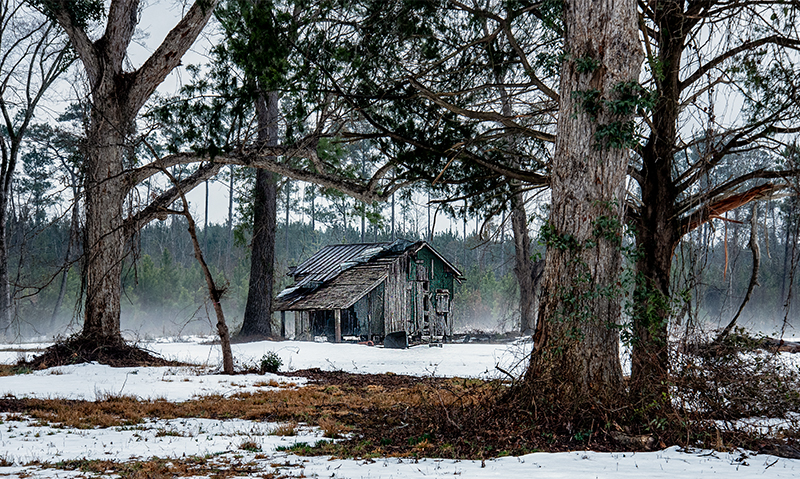
The crooked road to New Bern from Arapahoe, now known as Neuse Road

Amity Christian Church Cemetery, west of the Lionel Willis store, now an Eastern NC barbecue cafe … a visit to Grandmama and Granddaddy Johnson. Granddaddy and Mama raised me. Robert Earl Casey and his wife Cassie, have resided in the Reelsboro Sandhills Cemetery since before I was born.

Buckland Road, approaching the Suffolk Scarp which parallels NC 306 on the east
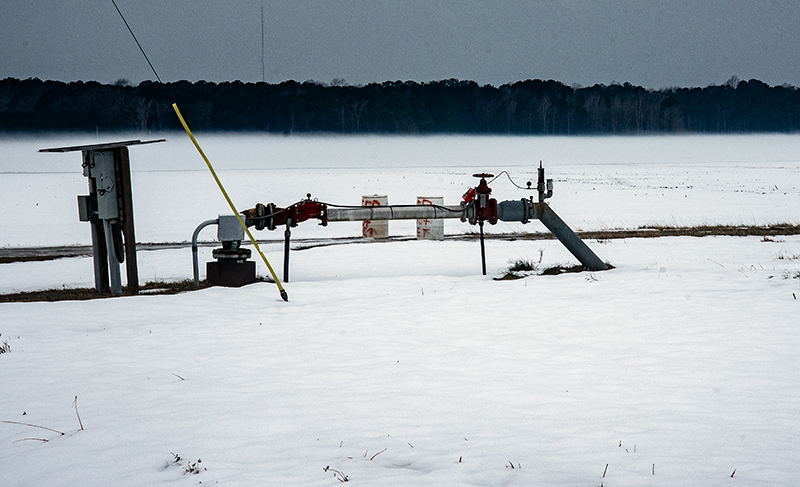
Well heads are no longer dug with a shovel, nor are they dug by driving 3, seven-foot sections of pipe in the ground, a screened point affixed to the first pipe down, yielding good, but odoriferous water.
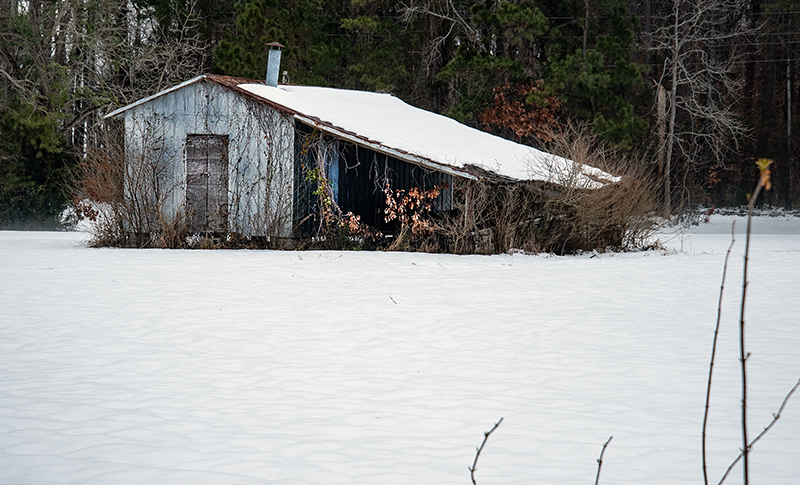
On NC 55 adjacent to the Grove and Vine event venue just west of Oriental.
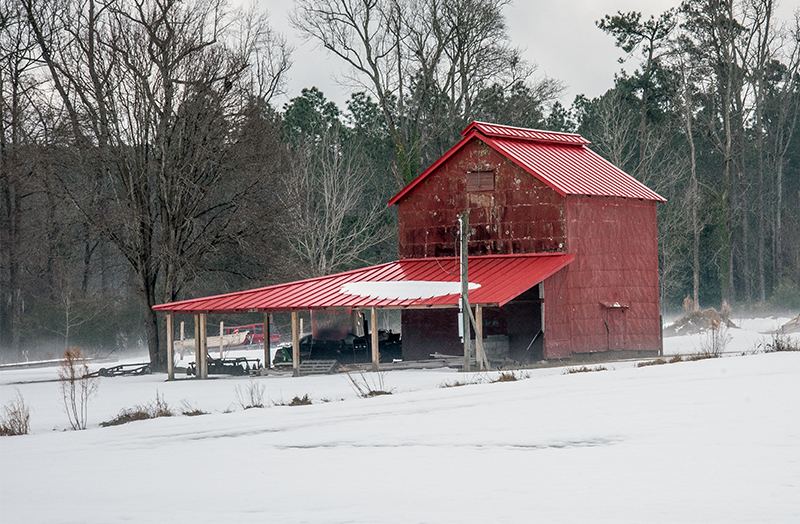
NC 55, just east of Upper Broad Creek and the county line.
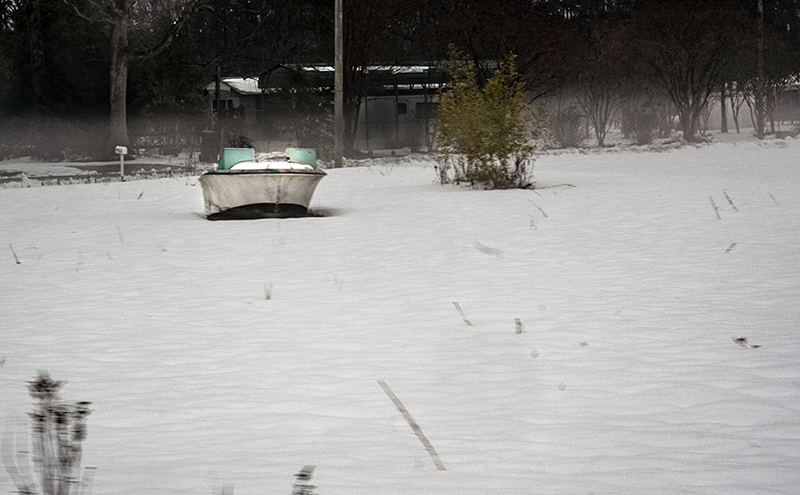
Hard aground, NC 55 just East of Stonewall and Alligator Creek
The Jeff Little Trio
From NC’s Appalachian high county to the Neuse River’s confluence with Pamlico Sound, a concert steeped in genuine originality was music to see, hear, embrace, and absorb.
Natives of Boone, NC in the state’s northwestern mountains, Jeff Little, pianist, Steve Lewis, acoustic guitar and banjo, and Luke Little, mandolin, walk onto the stage attired in jeans, plaid shirts, and ordinary caps from differing retail vendors. What follows is a virtuoso performance from internationally acclaimed musicians who have performed on several continents.
According to Jeff Little, when he was asked to fill in as his church’s ailing pianist whenever he was home from the road, he was asked if he could read music. He responded, “Not enough to hinder my playing.” That quip and their down home “uniforms” defy what an audience is about to hear.
Their music, could slightly remind one of a performance by Victor Borge, a virtuoso classical pianist who wore formal attire on stage, interspersed with large doses of dry humor. Humor is a much smaller part of the trio’s concert featuring Jeff’s virtuoso’s command of the piano; it is genuine, ample, witty, and entertaining, yet not at all slapstick in the Borge style. .
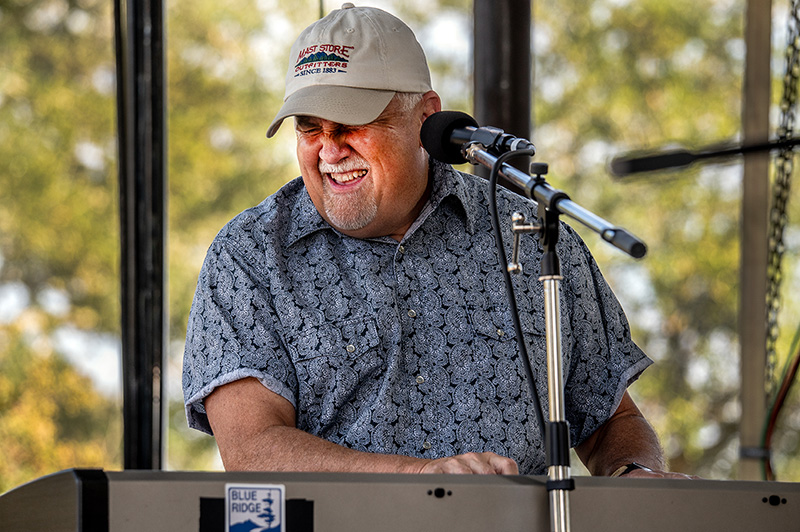
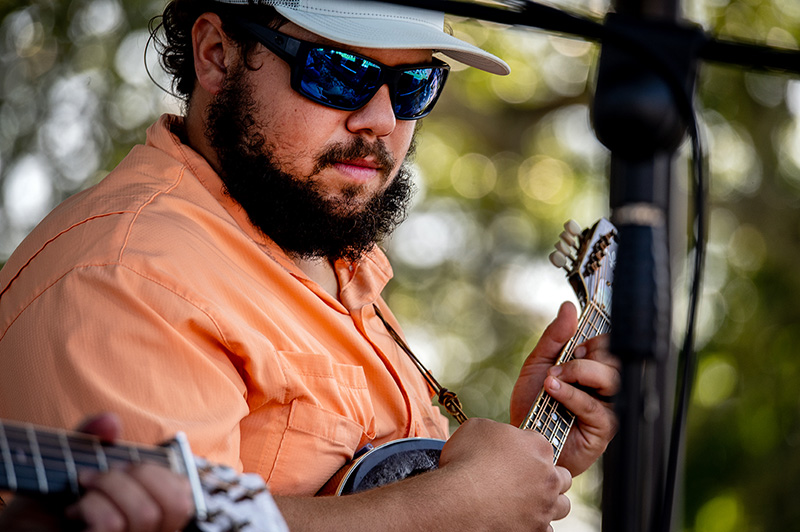
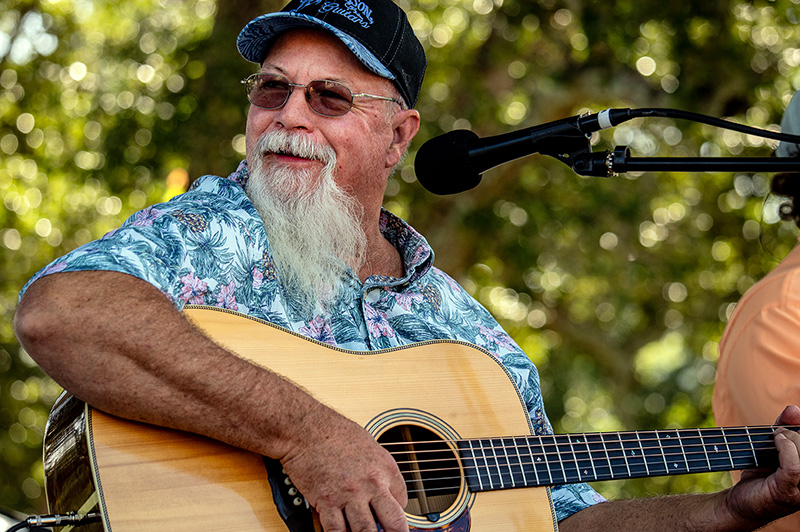
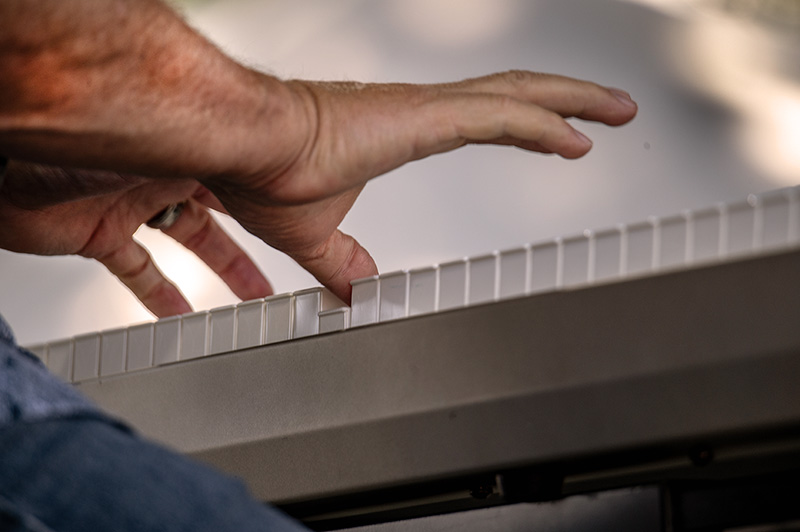
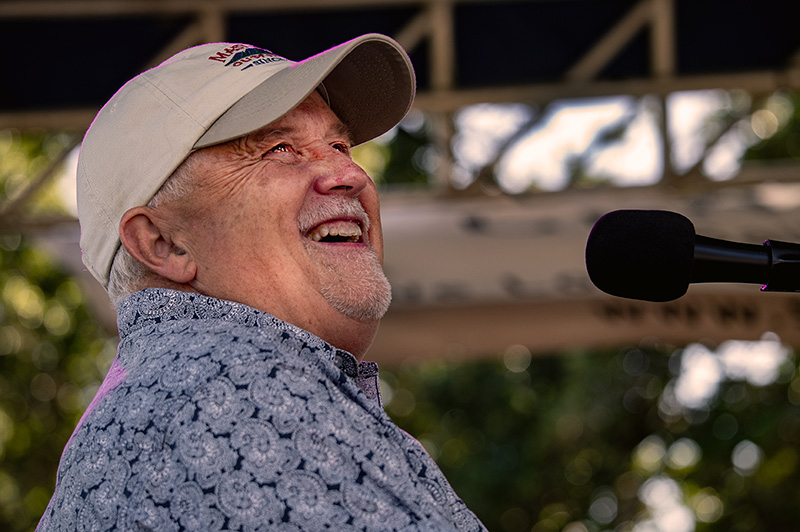
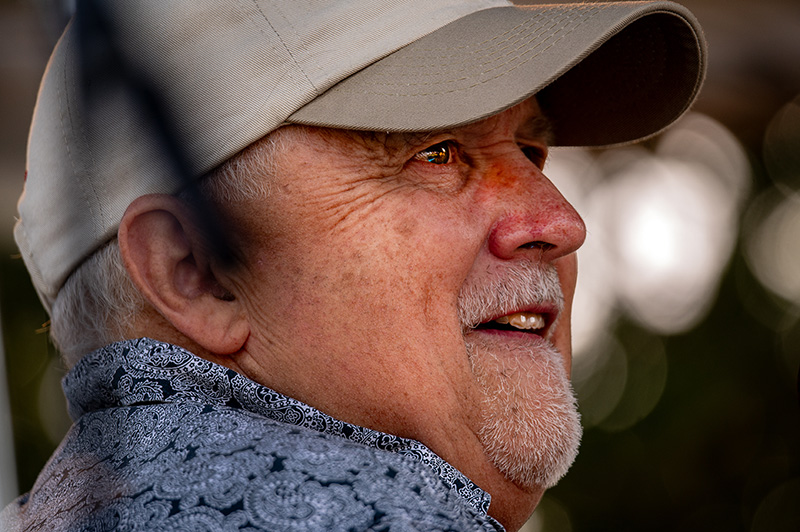
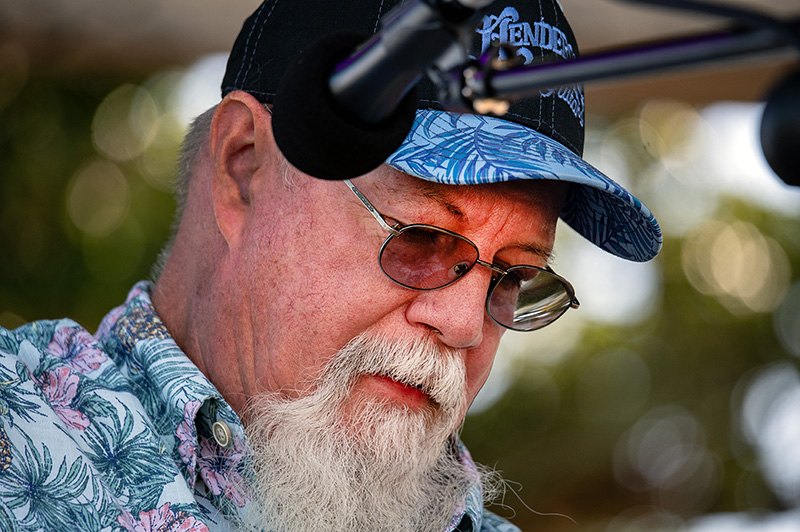
Steve Lewis, a flat picker from Todd, NC, won a nation award in acoustical guitar. The contest rules stipulated the winner must wait 5 years before competing again to provide a broader base for entries. Five years later, Steve won again. Jeff stated, “I told him that two national guitar championships did not mean his pay for each gig would reflect those accomplishments.” The concert is filled with both light banter and modest conversation that reflects the trio’s deep appreciation for the opportunity to share their musical heritage.
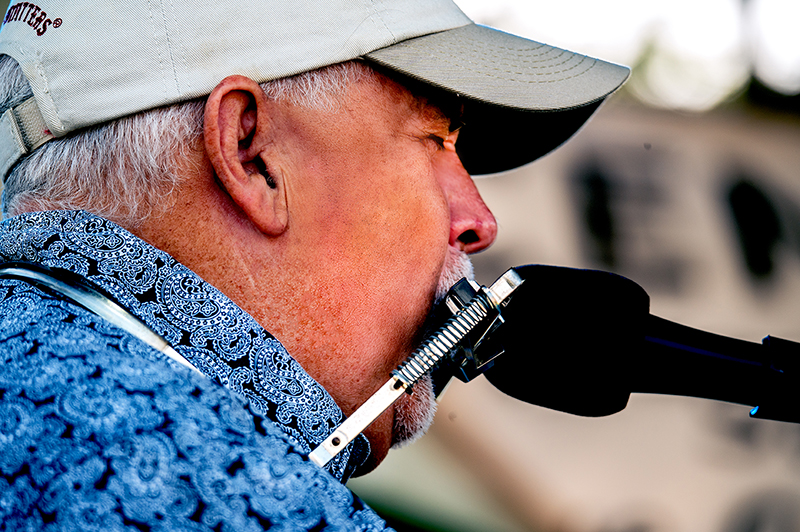
Jeff accompanies his keyboard with harmonica for a few numbers, despite his wife’s admonition that he is not known as a multi-tasker.
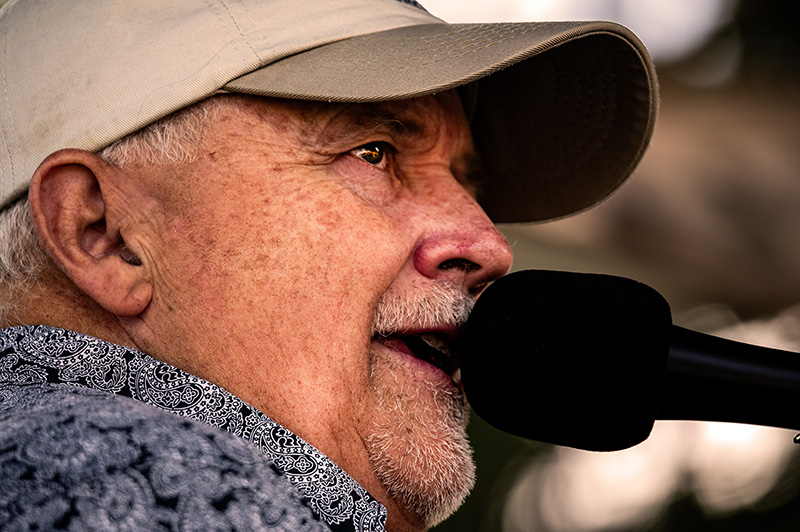

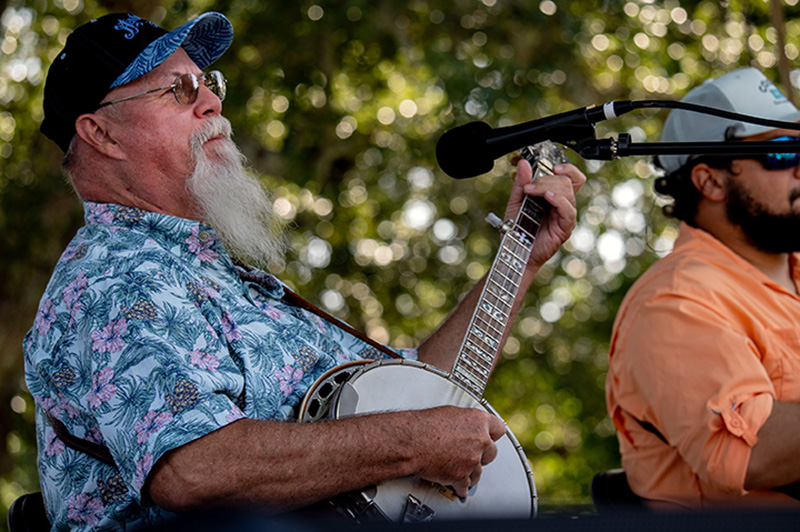
Though hidden from view by his pickin’ hand, the banjo of Steve Lewis has the look of Willie Nelson’s guitar, a high degree of experience.
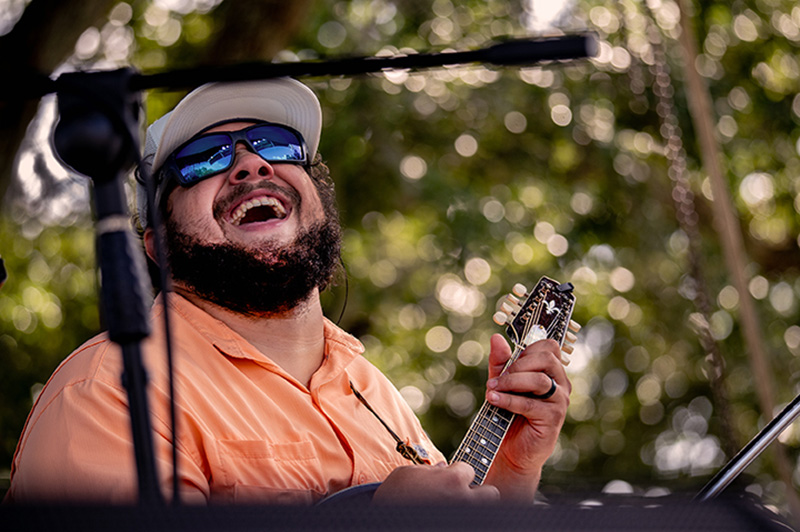
Luke Little, Jeff’s son, doubles as the trio’s marketing director, i.e., he is the one who has to stand by after the concert to sell CDs and T-shirts.

Where land and water meet sky in Pamlico County, Jeff Little, Steve Lewis, and Luke Little mesmerized their audience at Oriental’s Ol’ Front Porch Music Festival, 2025. Learn more about this non-assuming but astonishingly talented group at,
www.jefflittle.net
A personal note.
Good journalism for hard news, and to some extent feature writing, dictates a minimal use of adjectives and subjective opinion. News or feature, it is difficult to refrain from subjective praise to define the heritage, the musical traditions, the use of a rather restricted number of instruments, and the sheer entertainment value of The Jeff Little Trio. Most unusual is that the lead instrument is a piano, which is not always typical for bluegrass or mountain folk music groups. Also significant, they are not limited to just one genre of music.
The trio has drawn me to appreciate, on so many levels, the diverse genres of music and genuine showmanship they embrace. And, if one meets them before or after a performance, it is easy to walk away feeling as if you have known them for a very long time. Yet they are distinguished, award winning musicians honored by highly creditable entities (See bio on their website for details). It is easy for one to experience a sense of awe when a group dressed in such casual attire begins their performance. The performance can be a literal definition of virtuoso
The music of The Jeff Little Trio is classic, but not classical. Critics could call it shallow because it does not place listeners in the throes of epic events from throughout history in the way symphonies attempt to do. Instead, to music aficionados across genre borders, their performance is energetic and definitively uplifting, technically flawless to ears tuned to the feelings, not specific notes played by their instruments. Some of their work is fast-paced. Some reflects a change of pace, for example, “Morning has broken” which is on their album, “Amazing Grace.”
After a concert, it can be easy for one to be awestruck, viewing The Jeff Little Trio as not just great musicians, but also viewing them as great personalities. Their arrangements are a prime example of music acting as a universal language.
Coastal counties experience BW rise
People with property on the sounds and oceans are dealing with sea level rise. A consequential phenomenon, brackish water rise, is confronting those who live on coastal creeks and rivers which feed into the sounds. A very short ride on Oriental’s Kershaw Creek produces revealing images.
Sea level rise pushes sea water into the sounds. When pushed into the bordering creeks and rivers, this water mixes with relatively fresh water creating brackish water. Great for speckled trout, flounder, blue crabs and other species that like brackish water, but too much of a good thing is not always a good thing. Pines, cedars, and other vegetation on the banks of creeks and rivers thrive on fresh water.
This is not a consequence of erosion. As Duke geologist Orin Pilkey has explained, shoreline sand does not erode, it simply moves from place to place when the forces of nature move it. These images are representative of a growing trend on the banks of coastal creeks and rivers that empty into coastal sounds as brackish water rises.

Sea level rise thus impacts much more than ocean front property.


Martijn Dijkstra - Born to be Free
“The caged bird sings with a fearful trill,
of things unknown, but longed for still,
and his tune is heard on the distant hill,
for the caged bird sings of freedom.”
― Maya Angelou, I Know Why the Caged Bird Sings

“Men used to go to sea to discover the world. Now they go to sea to discover themselves.”
— Captain Michel Duplain

“It’s easy to waste your life. But it’s harder to take responsibility for an interesting life.”
__ Captain Martijn Dijkstra
The Prinses Mia is 50 feet long, has a 17 ft. beam, and draws about 6 feet of water. The paint job on the sails and the hull is distinctly childlike. The art, completed some time ago, represents work by Mia, who is now a first-year teen at 13. The shear size of the vessel at the town dock becomes a magnet for the eyes of locals, tourists, and sailors, both local and transient.
Once the Dutch captain, Martijn Dijkstra, (pronounced Martin Dykstra in English) makes an appearance, the magnet shifts from being the vessel itself to its captain. Patiently, with cheer, he answers questions of inquiring minds: where are you from; where are you going; who designed or built this boat.
In an interview spanning several days, one learns that Dijkstra, 49, retired at age 30 from a career on cargo ships and tugboats to become free and independent from society’s expectations. He had not by any means amassed a fortune or secured a stock portfolio for his future. He did not have wealthy parents to bankroll his desire to sail the high seas on his own boat, much less give him money to go shopping for a boat of his dreams with all accessories required for sailing the Atlantic Ocean’s blue waters.
Moral support from his family was abundant, as was their labor when he found an affordable boat that could be renovated to suit his needs. He tells of his early desire to be free, not just spiritually and emotionally free, but free every day from people telling him when, where, and how to do what.
He has survived sailing a quarter of a million miles at sea, traveling from continent to continent and islands in-between. In ongoing interviews and conversations with him, he gives away features and facts about his life that expose his ability to be free from needing someone to guide or supervise his every move and decision on a sailboat, in port or at sea. His words also reveal a willingness to accept total responsibility for his decisions and actions.

His mechanical abilities probably exceed those of many full-time marine mechanics. But it is the content of his character, his easy-going manner, his ability to laugh and laugh hard at himself, that strengthen the polarity of the magnet drawing people to him. What is it like to live a life that so many only imagine, of which so many envy, yet a life which so many are not equipped emotionally or technically to seek. The skeptical dismiss this lifestyle as immature or irrelevant for the long term.
But Billy Creech, a retired state representative from Johnston County, NC and former lumber mill owner/operator, admitted that if he were younger, he could see himself following Martijn’s lifestyle.
A sustained dialogue with Martijn reveals that he is disciplined yet affable and approachable. His physical appearance is more likely to portray an extra on the set of a pirate movie, yet that physical appearance combined with an endless supply of exuberance portrays a man who likes to have fun and be sociable. His energy and laughter seem boundless, but he can lay bare his serious nature when a conversation or situation turns serious.
For the fussy pseudo sailors, those who spend more time talking about sailing with their peers than actually sailing, let it be known that this veteran of decades of living and working on the water is the last person who would ever correct someone for calling a fender a bumper or a rope a line.
Therefore, this story does not focus on the techniques of sailing on blue water. It’s not about escapes encountering bad weather at sea. It is not about solving equipment failures on long cruises, nor is it about unexpected encounters with pirates or coast guard authorities from different countries.
Instead, it is Martijn, telling how he became a disciplined sailor who is totally accountable to himself, his parents, and the countless friends with whom he has bonded in port and at sea. He will tell you he appreciates having fun being and doing all things, alone or with a mate. One can conclude that Martijn having fun while working hard is a major component of his being free.
Martijn tells his own story.
________________
People meeting me for the first time will often ask how long has being on the water been a part of my life. The answer is, from the beginning of my time on earth. I was born in 1974 in the village of Bruinisse in Holland.
When I was only a week old, my father, a tugboat captain, became tired of all the visitors coming to the house to see the new baby. So he rented a 30 ft. cabin cruiser and the family took a holiday for a cruise about 30 miles from home. When I was 6 weeks old, he took me for a ride on his tugboat.
My grandfather was a fisherman, trawling mostly for mussels with a sailboat. When I was about 5 years old, he took me with him and tied me to the main mast so I would not wander overboard. Growing up, all I saw was boats and water.
My grandfather began fishing mostly local water all around windmills after the big flood in 1953 when the dikes didn’t hold. Fishing near one windmill, a fishing line from his boat pulled a wing off. It was my favorite story to hear. My grandfather would leave for work on Sunday and be gone until usually Thursday all year long. Now, doing the work each of them did, there are a lot more boats and bigger boats.
My dad, on tugboats, often worked a week on and then a week off. He guided container boats in from the North Sea. Cargo for Germany that comes in from the North Sea goes first to Holland on the way to Germany. It goes on to Germany by either rail or ships.

My grandfather would also make small wooden sail boats out of wooden shoes. When I was small, I wore wooden shoes all the time. After a while, they get quite comfortable. And quite useful. You can drink beer from them, and if you have to, hit people with them.
When I went out on my dad’s tugboat with him, he was letting me start the engines by the time I was 5 years old. Most of the tugs had a crew of 5. Things were much more casual on the boats then. My dad would take me to the pilot house and let me steer occasionally, especially on holidays. My mother and I would go and be on the tugboat for a whole week sometimes. The crew members had fun and drank beer on the boat when they were not on duty. I grew up close to my parents and I contact them now on the internet every day I can.

My dad is retired now and he and my mother are collecting traditional Dutch clothing and other artifacts from their village and the villages around them. Their house is now a museum and looks like one to all who visit them. Every village is different and the things that make up the heritage of different villages are different.
From the time I was 5, my dad had a sailboat, The first one I remember was built in 1904. Later, when it needed it, I completely restored her.
Unlike the schools in America, when I finished public school at 18, I had been trained to be a mate and engineer on a 200 ft. container ship. When I had time off, I would go sailing. I worked on those cargo boats for 6 years. It was hard to build up a pension because there would be long periods of time off. I then worked on tugboats for 6 years, continuing to sail on my time off.
On cargo boats, I had an awesome time visiting a lot of ports. I had a small motor bike so when I had time off in port, I would ramble about the countryside or about port towns. I have some really good memories of that time.
On tugboats, at first, crews would socialize after a watch and have a beer. But that changed. Crews became grumpy and sour. Tugboats could sometimes give you five months off out of a whole year; I used that time for sailing around home and saving money instead of spending money. It was time on tugboats that created my desire for this lifestyle.
The truth is, I wanted freedom more than I wanted a pension. My dad worked 50 years, and now, with the economy in Europe, his pension gets less each year and there is nothing he can do about it. So I have learned to live on very little.
I managed to get a steel hull sailboat with a wooden cabin. I removed that cabin and replaced it with steel. I sailed to northern Spain and spent the winter there. Not long after I set sail, when anyone would ask me if I found the freedom I wanted, I would say, “Ya.”
I sailed to Spain with that first boat and met people going to Portugal and the Canary Islands. I had dreamed about sailing there so I decided to just keep going. That was exercising my freedom. From the Canary Islands, I sailed on to the Caribbean. That was 19 years ago, 2005.
At sea, you don’t meet people. I thought the Caribbean would be fun, socializing with people from a lot of different places. I discovered later that people in America are more friendly than those in the Caribbean. After you visit there for a short time, people seem stuck where they are; they get grumpy. I would get work there making mechanical repairs, but generally, I didn’t find a lot of socializing among the sailors. They just seemed to sit inside their boats. They would spend a fortune getting there, but they didn’t mingle with people once they got there.
I would knock on doors. I learned they may or may not come out. Here in America, people come out, walk around onshore, talk to you and share experiences.
I have never been really afraid of anything happening to me on the water that would leave me stranded. This boat is made of steel and she is really sea worthy. I have a sewing machine on board to repair sails and a lot of tools so I can rebuild an engine if I have to.
I cut my hand once when I was at sea. The cut was deep and I was about 6 hours from any land mass with a doctor. I simply sewed it up myself. I try to be careful and don’t do dangerous or hard things at night.
Once, I was in Maine after sailing a hundred thousand miles on that first boat. I went home to learn that the Prinses Mia was available but it was going to need a lot of work. When my dad offered to help me with labor, I couldn’t say no. She had been originally launched in 1979.

The inside helm of the Prinses Mia.
Of the places I can easily remember, Prinses Mia and I have now sailed from Holland to Denmark, Sweden, Norway, England, the USA, Portugal, the Canary Islands, the Caribbean, Bermuda, Maine, and down the coast to Oriental. I have been on this boat for about 150,000 miles over the last 13 years. One of my recent modifications has been a new bow sprit. I found a broken mast from a sunken sailboat in the Caribbean and made it into a 22 ft. bowsprit. After hurricanes, there are a lot of sunken boats in the Caribbean where you can find all kinds of supplies.

Stephanie is my new mate, been with me 5 months. She was in Germany when we chatted on the internet. She flew to Portugal in January and I interviewed her for the mate’s position. I gave her an intensive line of questioning before she could go on a long cruise. I have to know all there is to know about a prospective mate to see if she will be happy at sea, with the boat and with me.
Before the interview, I gave Stephanie a drink and then let her get drunk. When a person is drunk, they will open up and tell you all about themselves, all the things you need to know if they are the right person to sail across an ocean with you.
Author’s note: When Stephanie was asked about this interview process, with her eyes rolling from side to side, she replied, “It lasted for a long time.”

I keep my boat mechanically maintained by visiting salvage yards instead of expensive marine supply stores. I don’t shop at fancy boat stores. When we visited Bermuda on the way here, I picked up a small diesel engine that had been thrown away. It had been used on a cement truck. I took it onboard, went through it, and now I use it to pull my anchor. I hand start this little diesel, something some people have never seen before, but there is no starter for this engine.
I always have enough money for my basic needs, food and beer.
In the beginning, I was using cooking oil I collected from restaurants for fuel. I had my own way of filtering it and making it run in diesel engines. Now, instead of giving that oil away to get rid of it, restaurants sell it. So I started locating old heating oil and diesel fuel that people wanted to get rid of. I filter it and do what I have to so it will run in a diesel engine.
A lot of people go cruising based on how much they think it will cost. I have my own way of doing things. That way means sailing without spending all that money. You don’t have to be a millionaire to go sailing.
So many people don’t understand this lifestyle. Once when I had an attractive mate, I was told that I should settle down, get a house, marry, raise a family, and do what normal people do. I would prefer to die rather than be constrained by a house all the time. And, old friends sort of chastise me now. “If you had kept your job, you would be a tug captain now.” They don’t understand I would not trade places with a tug captain.
What do you do; what do you have to look forward to when you live in a house all the time? Watch the walls, clean out the garage, mow the grass?
On a boat, I know what I’m going to do, even if at sea it’s just watching the days and the waves go by. I don’t like to be told what to do. I love the freedom and responsibilities that come with living free. Its easy to waste your life, but it’s very hard to to take responsibility for an interesting life.
I am responsible for keeping this boat going, mechanically and otherwise. Sure it takes some money, but with the right skills and attitude, there’s always a way to get by. I don’t have parents bankrolling my adventures: I send money back to them when I have a little extra because I basically have no need for a lot of money.
Out for days and weeks at sea, you can get irritated about little things. But a drink in the evenings, a beer or two, the right person will open up and talk it out. Stephanie and I have had nothing but fun the last 5 months. We laugh all day. We have not had one single argument this whole time she has been on the Prinses Mia.

You never know how long your life will be. Someone my age had a brain tumor, so it’s important to live life to the fullest every day. So many people realize that when it’s too late.
_________________
Does a man who basically worked for 12 years, then retired to spend life at sea on the adventure of a lifetime, make valuable contributions to society, to himself, and to others?
Tom Lathrop, a retired electrical engineer, is a most accomplished boat builder and sailor living in Oriental, NC. He has known Martijn from his visits to this village on the Intra-coastal Waterway over the last 13 years. Tom observed, “A man like Martin makes contributions that largely go unseen.”
Neal Whicher, after retirement from a career in the electronics industry, sailed up and down the East Coast many times. Now 88, he lives on his boat docked in Oriental. He said, “Any man who brings a smile to another person’s face is making a great contribution to humanity.” Has Martijn Dijkstra demonstrated through his observations about having fun and socializing with others an ongoing effort to bring smiles to the faces of others?
As for the question of living a responsible life, look to the late president, Lyndon Baines Johnson. During a time of turmoil during his administration, he observed, “Equal rights require equal responsibilities.” Has Martijn Dijkstra demonstrated the assumption of total responsibility for the right to live a free life that fulfills his dreams?
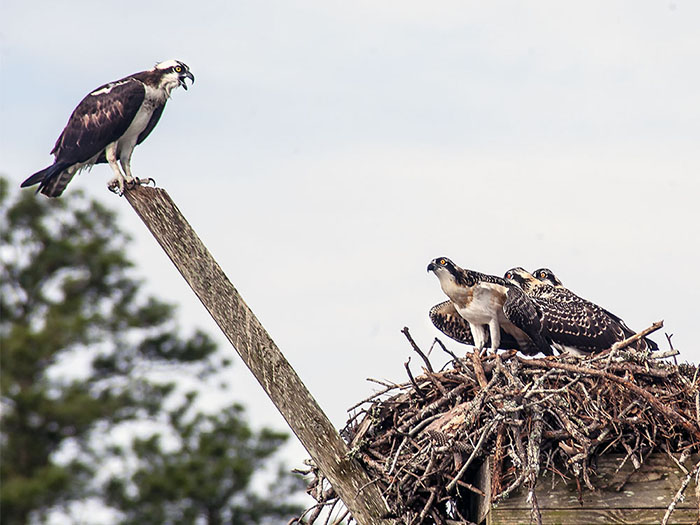
Pamlico osprey family
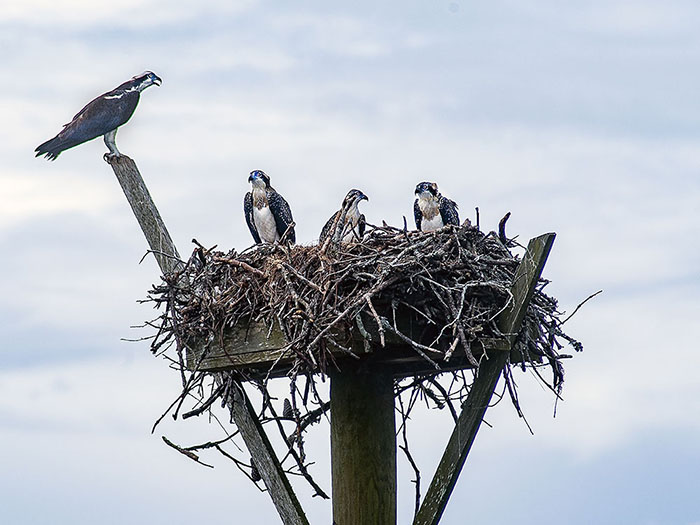
Near the mouth of Whitaker Creek, which is near the mouth of the Neuse River, which on clear days is in sight of the Neuse River’s junction with Pamlico Sound, three young osprey are stretching their wings in preparation for a life beyond their nest. They were photographed in the early morning hours of July 4. Common to the area, ospreys are occasionally mistaken to be eagles because of their white head feathers. But they have a dark stripe running from their yellow eyes to the back of their heads. Unlike eagles, ospreys do not have white tail feathers. They are also much smaller than eagles, weighing about 4 pounds.
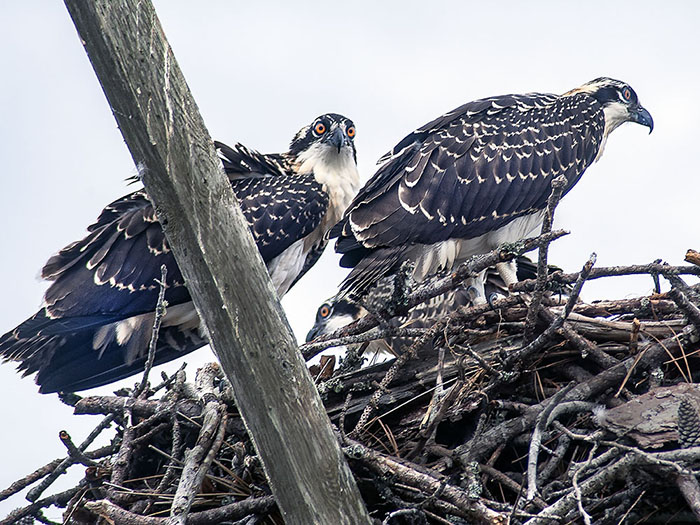
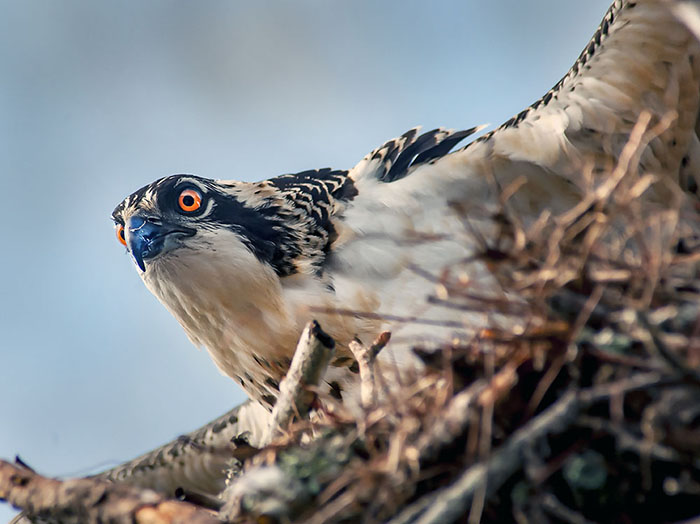
Sometimes referred to as sea hawks because they are also birds of prey, ospreys dine almost exclusively on fish. Diving to the water from heights as much as 200 feet, they strike the water feet first to snare their prey. This “air fishing” is enhanced by reversible front toes which assist in clutching a slippery fish on the return flight to nests.
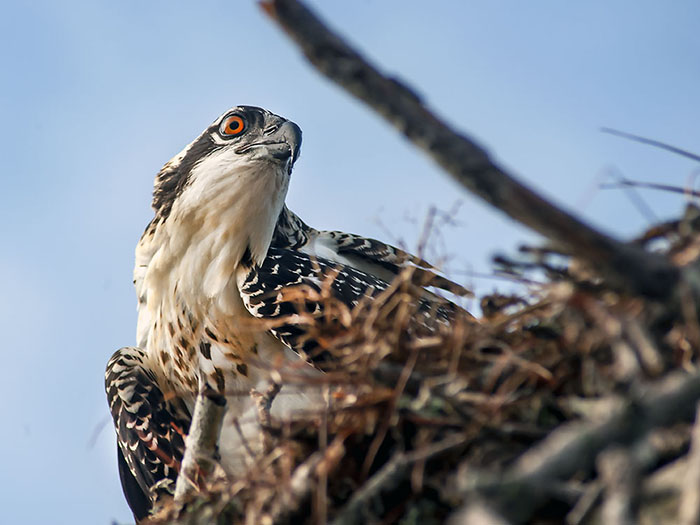
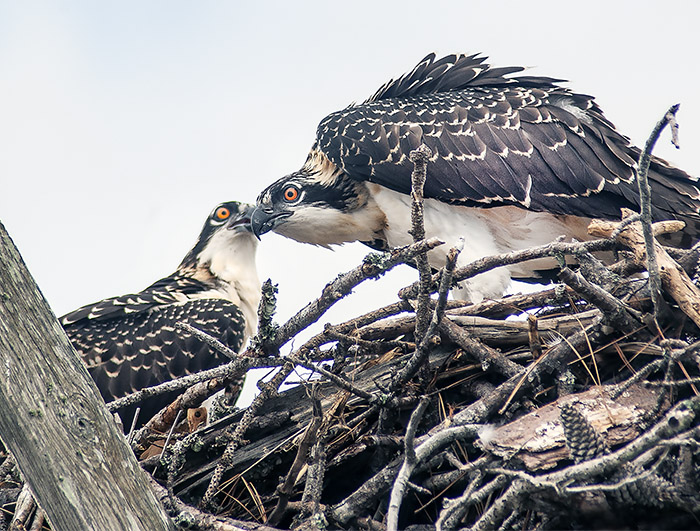
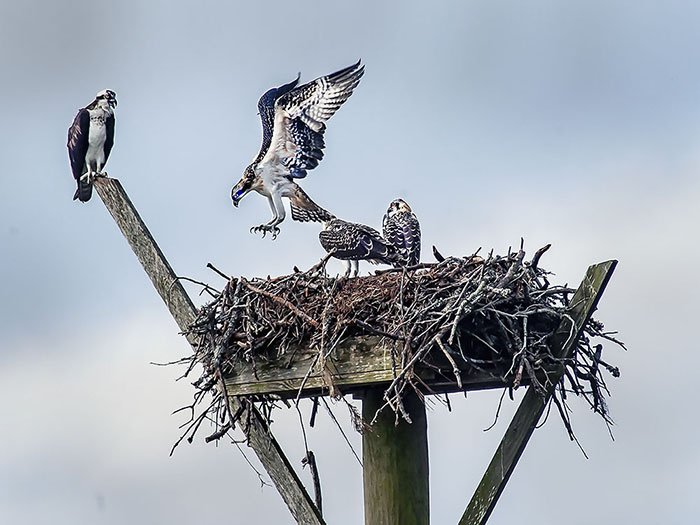
Like bald eagles, osprey often use the same nest after refurbishing them each season. Those 3 years or older generally mate for life. The female lays 2 -4 eggs about 3 days apart. The chicks hatch in the sequential order in which the eggs are laid, thus the first hatched grows faster than its siblings. The chicks fledge in about 55 days. The young birds are characterized by bright orange eyes.
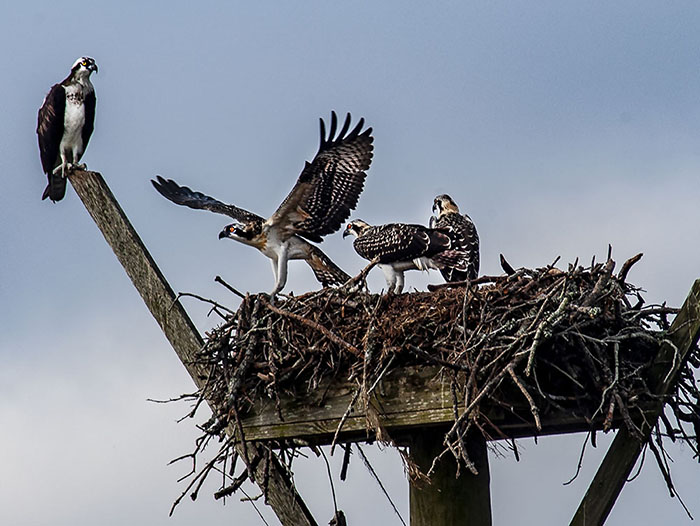
A necklace of brown spots across the breast is more pronounced in females. The upper tails on males is dark brown with paler bands. Females have darker heads than males. Males and females share household duties while the eggs are incubating.